
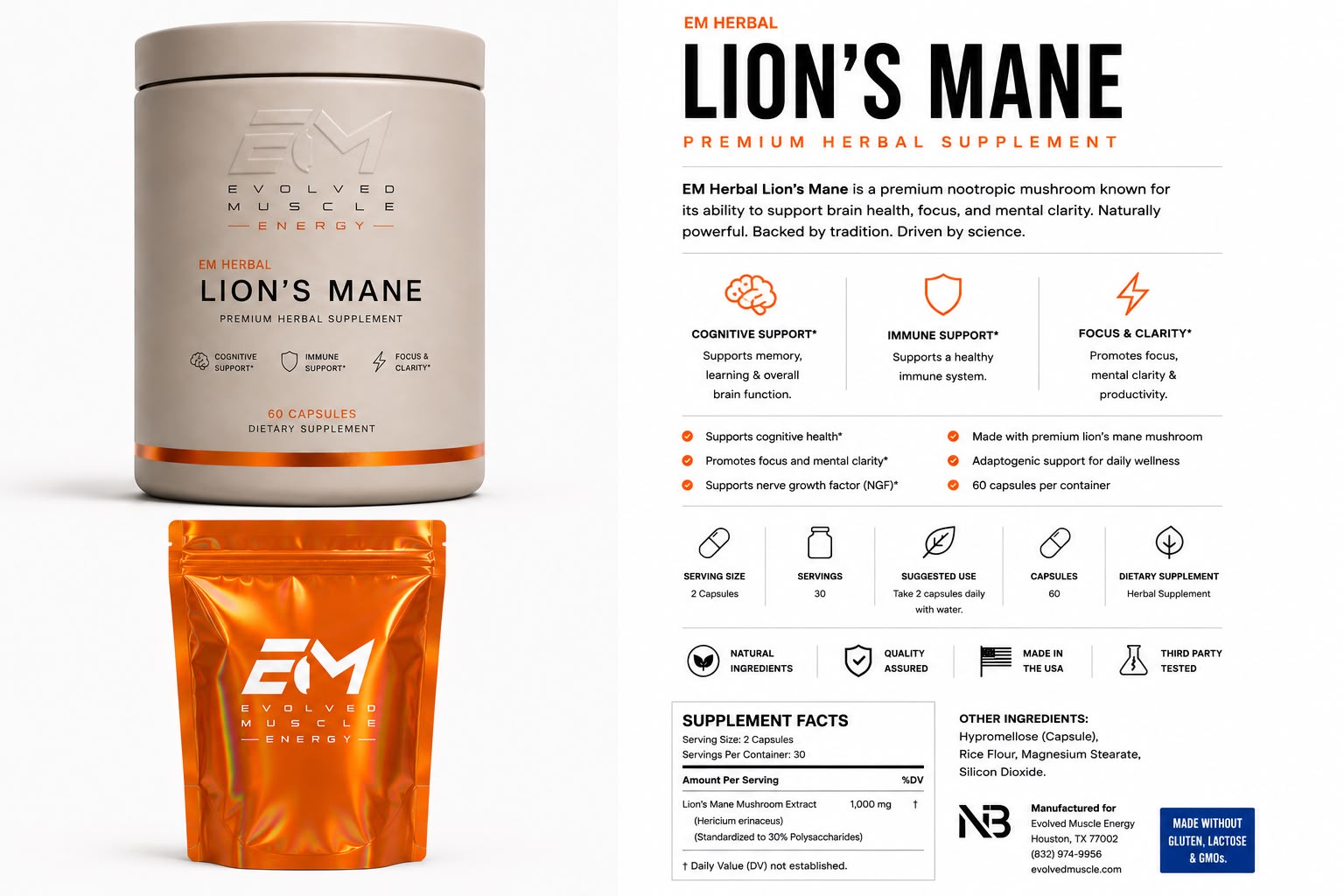
Description
Lion’s mane (Hericium erinaceus) is an edible and medicinal mushroom native to North America, Europe, and Asia, easily recognized by its shaggy, white, pom-pom-like appearance that resembles a lion’s mane. It has been used for centuries in East Asian culinary and traditional medical practices to support general vitality. In recent years, it has gained widespread global popularity as a dietary supplement—available in powders, capsules, and liquid extracts—primarily marketed as a nootropic for cognitive enhancement.
Key Health Benefits & Scientific Research:
- Brain Health & Cognition: Preclinical studies indicate that compounds in lion’s mane, called hericenones and erinacines, stimulate the synthesis of Nerve Growth Factor (NGF). NGF helps regulate the growth, maintenance, and repair of brain cells. Small human trials have linked it to improved cognitive scores in adults with mild cognitive impairment.
- Mood Support: Research published via PubMed Central (PMC) notes its potential role in mitigating mild symptoms of anxiety and depression. This may be due to its anti-inflammatory effects on the brain or its ability to stimulate neural survival pathways.
- Digestive System Protection: In traditional medicine, it is frequently used to alleviate stomach ulcers and gastritis. Animal models show it may inhibit the growth of H. pylori bacteria and protect the stomach lining.
- Metabolic Health: Lab data outlined by Healthline suggests it can improve fat metabolism, lower triglyceride levels, and assist in managing blood sugar spikes.
Culinary Uses:
For cooking, fresh lion’s mane mushrooms are highly prized by chefs for their unique, stringy texture and a mild flavor profile that closely resembles seafood like crab, lobster, or shrimp. They are commonly sautéed in butter or oil, sliced into thick “steaks,” or shredded to make plant-based “crab cakes”.



Reviews
There are no reviews yet.